
EPS

Eps packaging
EPS foam packaging is the industry standard for lightweight insulation and shock protection during chilled and frozen transport. As an EPS packaging company, Inter Fresh Concepts supplies Dutch-made EPS boxes and custom inserts that, when paired with the right coolants, can help keep products within 2, 8 °C for up to 48 hours in a well-insulated box, with actual time and temperature dependent on many external and internal factors. Our EPS packaging material is food-safe, hygienic and designed for efficient air, road and courier shipments.
What is eps in packaging?
EPS stands for expanded polystyrene. It is a closed-cell foam with approximately 98 percent air, which gives it a low thermal conductivity and a very high strength-to-weight ratio. In practice, that means packaging EPS boxes offer reliable insulation at minimal tare weight. EPS packaging foam is widely used for fresh food, seafood, pharmaceuticals and e-commerce meal kits because it stabilises temperature, cushions impacts and resists moisture.
What is EPS packaging in simple terms? It is molded foam packaging that surrounds your product with a protective shell. Wall thickness and foam density determine performance. Typical EPS box walls are 20 to 40 mm, with densities selected for the duty cycle and load. EPS maintains integrity from about -40 to +60 °C, does not absorb water and can be produced in many shapes and lid configurations.
Key properties:
- Thermal performance, low k-value and consistent insulation even when external temperatures fluctuate.
- Mechanical strength, good compressive strength for stacking on pallets and during airfreight.
- Hygiene, inert, non-dusting and food-safe for direct contact. Produced under HACCP and BRC packaging standards.
- Process efficiency, repeatable dimensions, easy taping and labeling, compatible with gel packs, cold packs and dry ice.
If you are comparing foam packaging solutions, the core variables are wall thickness, density, internal volume, coolant mass, preconditioning and transit duration. These determine hold time in the cold chain more than brand names do.
Protect your packages with EPS
EPS protects in two ways. It buffers shocks and vibration, and it slows down heat transfer so your coolant can do the real cooling work. Follow these steps to get consistent results:
- Pre-chill the product, the EPS box and the coolant to the target range.
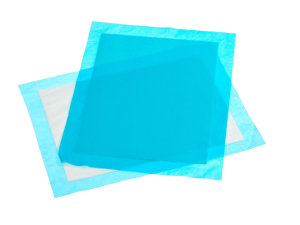
- Place absorption pads when needed to keep the interior dry and clean.
- Load product centrally, avoid direct contact with the inner walls.
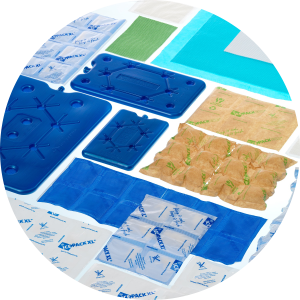
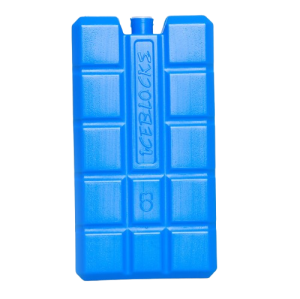
- Add coolants on top and, for longer holds, on the sides. Use Ice Pack XL or gel packs for 2, 8 °C, or dry ice for frozen shipments where permitted.
- Fill voids to reduce air exchange, then close the lid firmly and tape all seams.
- Label orientation, payload weight, and temperature range clearly. Use a temperature logger during qualification.
Advantages of eps foam packaging:
- Very low weight with high insulation value, ideal for airfreight.
- Consistent, predictable performance, easy to qualify and scale.
- Moisture resistant and hygienic, suitable for direct food contact.
- Strong stacking strength, reduces product damage and claims.
Limitations to consider:
- Bulky for return logistics, not foldable.
- Subject to local restrictions, for example eps packaging ban rules in some cities for food service items. Transport packaging for goods is often treated differently, always check local regulations.
- Not biodegradable. If you need biodegradable EPS packaging options or a bio EPS foam cooler, speak with our team about paper-based insulation or bio-based foams that fit your route and waste stream.
Looking for alternatives or complementary materials? See our insulated options beyond EPS, including recyclable paper-based systems, in our overview of insulated packaging. For eco choices and lifecycle tips, our guide to eco-friendly packaging solutions for cold transport is a good starting point.
What are the best brands of EPS packaging? In our experience, specification beats branding. Match box size, wall thickness, density and coolant plan to your route. That is how you achieve fewer excursions and lower claims.
Custom foam packaging solutions in different sizes
Every payload and route profile is different, so we provide custom EPS foam packaging and off-the-shelf sizes. Inter Fresh Concepts supplies EPS shipping boxes from 4.7 L up to 45 L, produced to high dimensional accuracy for smooth packing and palletisation.
Popular sizes:
- Small format for samples and courier parcels. See the compact EPS Box 4.7.
- Mid-size for retail fish, meat or meal kits. A versatile option is EPS Box 17.5.
- All-rounder for larger assortments or longer holds, EPS Box 25.
- High-volume shipments and airfreight seafood, EPS Box 45.
Need a specific footprint, lid lock, drainage feature or wall thickness? We design custom EPS packaging solutions to your payload and time-temperature target. Inserts and separators are available, including polylam foam packaging solutions and other custom foam packaging solutions if your application needs additional cushioning, vial nests or bottle cradles.
Branding options include molded-in logos or printed lids to support private label programs. Please contact our specialists for more information about our custom solutions. Questions? Please contact us. We are happy to help you!
EPS packaging for the seafood industry
EPS boxes dominate the seafood cold chain because they combine hygiene, insulation and durability with a low tare weight. Fresh fish typically ships near 0 to 2 °C. EPS stabilises that range, resists external humidity and protects fillets and whole fish during handling.
What we recommend in seafood:
- Use Ice Pack XL sheets or gel packs sized to your species, weight and route. For long-haul airfreight, place coolant on top and sides.
- Add fishpads to capture meltwater and purge, keeping cartons clean and reducing odor at delivery.
- Pre-chill boxes before packing to reduce early heat load. Close the lid firmly and tape for a tight seal.
- Validate the pack-out with a logger on your route. Adjust coolant mass seasonally.
Explore our approach and products for seafood on the seafood packaging solutions page. Absorption matters too, see our fishpads for clean, compliant shipments.
We also support tuna processors, shellfish exporters and aquaculture with qualification support and documentation on request. Food-safe certified boxes and components are available. Please contact our specialists for certification documents.
Eps packaging recycling tips
EPS packaging recycling works well when you keep the material clean, dry and separate. The foam is 100 percent recyclable into new products, but acceptance varies by region and volume. Follow these steps to improve recyclability and reduce waste:
- Keep it clean and dry. Empty the box, remove liners, labels and tape. Do not include contaminated boxes in recycling.
- Sort by color and type. White post-consumer EPS packaging foam from transport boxes has the best acceptance.
- Avoid breaking it up. Nested boxes save space, but loose flakes are difficult to handle. For large volumes, consider compaction.
- Use approved drop-off points. Many municipal curbside streams do not accept EPS. Dedicated collection sites or commercial recyclers do.
- Check local rules. Some regions apply an eps packaging ban to single-use foodservice items. Transport packaging for goods is often excluded, but always verify.
- Consider alternatives where recycling is not available. Paper-based insulation, reusable shippers or bio-based foams are options. BioEPS foam packaging and bio EPS foam cooler products are typically industrially compostable only in controlled facilities, and acceptance depends on local infrastructure.
If you need help selecting a design that fits your route and local waste streams, we can advise on EPS and alternative systems. Start with our insulated packaging overview or speak to our team.
Questions? Please contact us. We are happy to help you! Please contact our specialists.
Frequently Asked Questions